
Sustainable Luxury Hotels in Riviera Maya Transform Travel


Architecture and Environmental Design in Sustainable Luxury Hotels
One of the defining features of many sustainable luxury hotels in the Riviera Maya is their architectural integration with the natural environment. Rather than large-scale developments that drastically alter landscapes, several resorts are designed to coexist with surrounding ecosystems such as mangroves, tropical forests, and coastal dunes.
Low-density construction has become a common strategy in environmentally conscious resorts. This approach limits the number of buildings across large natural areas, helping preserve wildlife habitats and biodiversity corridors.
Hotels including Rosewood Mayakoba, Banyan Tree Mayakoba, Palmaïa –The House of AïA and La Casa de la Playa - Xcaret illustrate how architectural planning can support environmental preservation while maintaining luxury standards. Many of these resorts use locally sourced materials such as limestone and regional wood, reducing transportation emissions while reflecting the natural identity of the region.
Mangrove ecosystems, which play a critical role in protecting coastlines and maintaining marine biodiversity, are also frequently incorporated into resort design plans. Protecting these natural systems is increasingly recognized as essential to long-term tourism sustainability.
Operational Practices That Reduce Environmental Impact
Beyond architecture, sustainable luxury hotels in the Riviera Maya are implementing operational systems designed to reduce environmental impact across energy use, water consumption, and waste management.
Renewable energy technologies are increasingly common in luxury resorts. Solar panels are often used to heat water for guest rooms and spa facilities, reducing reliance on fossil fuels. Energy-efficient lighting systems and smart climate-control technologies also help reduce electricity consumption.
Water conservation programs are another key focus. Because the Yucatán Peninsula relies on underground aquifers connected to cenotes and coastal ecosystems, careful water management is essential. Many hotels operate advanced filtration systems that allow treated water to be reused for landscaping and irrigation.
Waste reduction strategies have also gained importance. Several properties are introducing refillable amenities, eliminating single-use plastics, and implementing recycling programs designed to minimize landfill waste.

Conservation Partnerships and Marine Protection
Sustainability efforts in the Riviera Maya often extend beyond hotel operations. Many sustainable luxury hotels collaborate with environmental organizations working to protect the region’s marine ecosystems.
These collaborations frequently focus on the Mesoamerican Reef, the second-largest coral reef system in the world, which stretches along the Caribbean coast of Mexico and Central America. Conservation initiatives include coral restoration projects, marine biodiversity monitoring, and environmental education programs for guests.
Organizations such as Oceanus A.C., the MARES Center, and the Saving Our Sharks Foundation work alongside tourism stakeholders to support marine conservation across the Mexican Caribbean. These partnerships help fund research programs and raise awareness about the importance of protecting ocean biodiversity.
Why Sustainability Certifications Matter for Sustainable Luxury Hotels
Environmental certifications are becoming an important tool for identifying sustainable luxury hotels that have implemented verifiable environmental practices. Independent certification programs evaluate resorts based on criteria such as energy efficiency, water management, biodiversity protection, and community engagement.
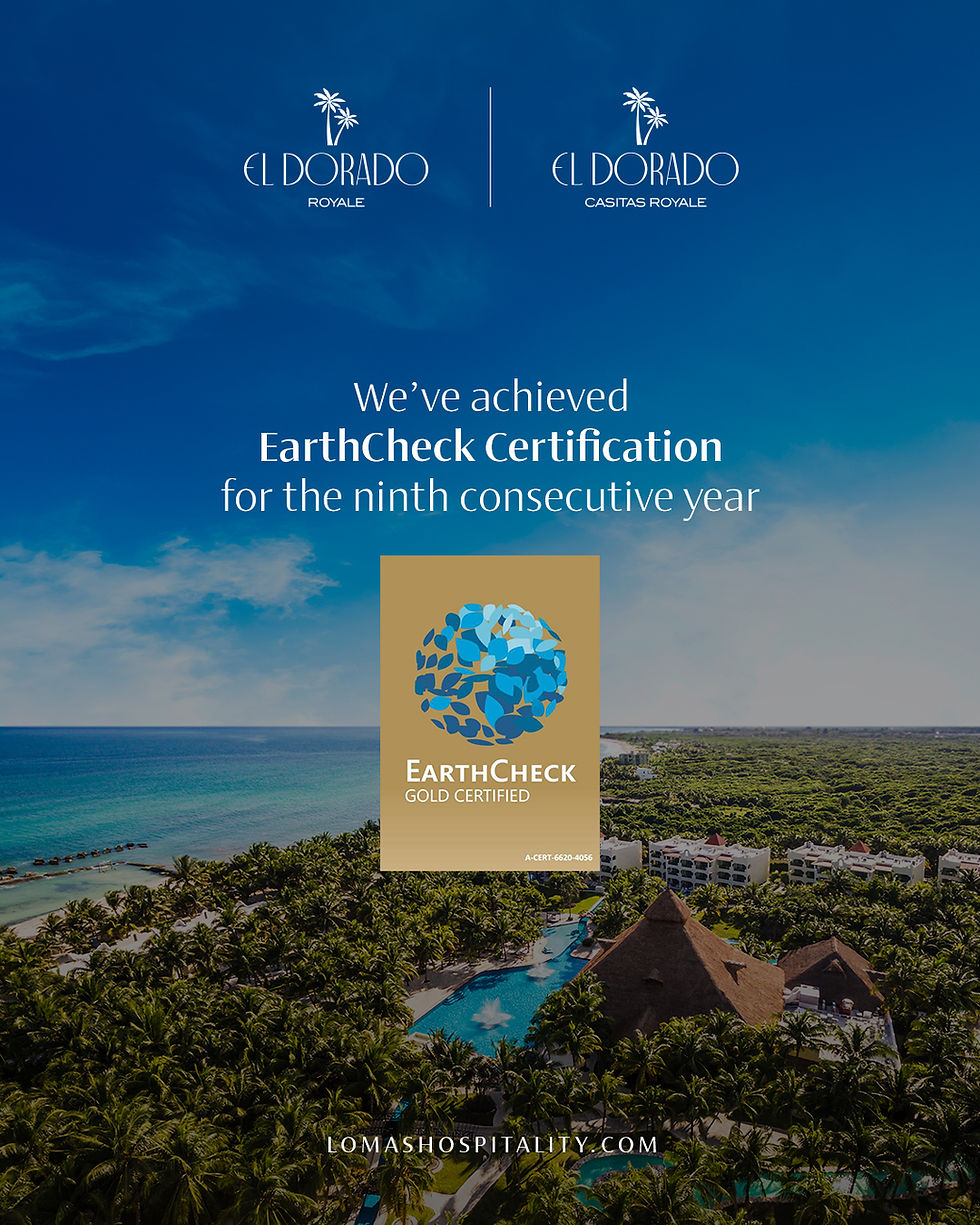
Among the most recognized sustainability certifications in the hospitality sector are EarthCheck, Preferred by nature, Green Globe, and LEED (Leadership in Energy and Environmental Design). These programs require hotels to meet strict environmental standards and undergo periodic audits to verify that sustainability initiatives are consistently maintained.
Several luxury resorts in the Riviera Maya have adopted these certification frameworks. Properties within the Mayakoba eco-reserve, including Fairmont Mayakoba and Rosewood Mayakoba, operate environmental programs focused on mangrove preservation and biodiversity monitoring. Meanwhile, Hotel Xcaret México has received EarthCheck certification for its integration of sustainable infrastructure and cultural preservation initiatives.
Certifications provide travelers with measurable indicators that hotels are implementing structured environmental programs rather than simply promoting sustainability as a marketing concept.

Market Trends Driving Sustainable Luxury Hotels
The growth of sustainable luxury hotels is closely linked to changing traveler expectations. Industry research indicates that many travelers are increasingly willing to choose accommodations that demonstrate responsible environmental practices.
In the luxury travel segment, sustainability has become part of the value proposition. Affluent travelers often seek experiences that combine comfort, exclusivity, and environmental responsibility. As a result, hotels that integrate sustainability into their brand identity are gaining greater visibility within the global tourism market.
Destinations such as the Riviera Maya are particularly affected by this trend. Because tourism in the region depends on coral reefs, beaches, and tropical ecosystems, protecting these natural resources has become essential for the long-term viability of the destination.
The Future of Sustainable Luxury Hotels in Riviera Maya
As sustainability becomes a central theme in global travel, sustainable luxury hotels are expected to play an increasingly important role in shaping tourism development in the Mexican Caribbean.
The Riviera Maya’s natural landscapes, including coral reefs, mangroves, cenotes, and tropical forests,make it one of the most ecologically sensitive tourism regions in the world. For hospitality developers and operators, protecting these ecosystems is not only an environmental responsibility but also a long-term economic necessity.cenote
Hotels that successfully combine environmental stewardship with high-end hospitality demonstrate how tourism can evolve toward a more balanced model of development. Through responsible architecture, conservation partnerships, and verified sustainability certifications, the Riviera Maya offers a compelling example of how luxury travel can coexist with environmental protection in the years ahead.


Comments